Search This Blog

Tuesday, February 22, 2011

Vidyadhar Vyas

Vidyadhar Vyas

Vidyadhar Vyas
Born September 8, 1944
Origin Nagpur, India
Genres Hindustani classical music,
Gwalior Gharana
Occupations Classical Vocalist
Years active 1965 - present

Pandit Vidyadhar Vyas (born September 8, 1944) is an Indian Hindustani vocalist, and a contemporary exponent of the Paluskar style of North Indian classical singing. He belongs to the prestigious Gwalior gharana and the illustrious lineage of Sangeet Maharshi Pandit Vishnu Digambar Paluskar contributed to his background. His molding of creative thinking, artistic approach and aesthetic research in the gharana gayaki with his arduous riyaz, he matured as a maestro in his own right.


Early life and background

Vidyadhar Vyas was born in Maharashtra to Gayanacharya Pandit Narayanrao Vyas, himself an outstanding disciple of Pandit Paluskar.. His khayal, tarana and bhajan gayaki by his renowned father.

He holds a Master's degree in Sociology from the University of Mumbai and a Doctorate in Hindustani Classical Vocal Music from the Akhil Bharatiya Gandharva Mahavidyalaya Mandal, Mumbai.

Career

Gifted with a voice that is mellow and musical, Pandit Vyas presents a unique and pleasing blend of beauty of form and content of khayal. He takes every care to sustain and develop the Raga rasa and tries to harmonize it with the bhava of the compositions.

Awarded Top Grade status by All India Radio, Pandit Vyas is an equally popular artiste in the television media and has several cassettes and CDs to his credit. A top-notch concert performer with creditable performances in almost all the major festivals in India, he has also performed in the USA, Europe, Mauritius and other parts of the world.

He has written several articles for leading music journals and has conceived and presented a variety of programmes on the genesis and evolution of Hindustani Raga Music. Pandit Vyas also excels in conducting lecture demonstrations, which are both enlightening and entertaining.

In addition to being a performing artist, Vidyadhar Vyas is known as a teacher. He has been teaching and mentoring students at undergraduate and postgraduate levels since 1964 and doctorate level since 1972. In 1973 he became Principal of the Government Music College (Rajasthan Sangeet Sansthan) at Jaipur. In 1984 he became Head of the Department of Music, University of Mumbai. In February 2004, he became the first duly selected Vice Chancellor of the newly formed Bhatkhande Music Institute Deemed University at Lucknow, Uttar Pradesh.

In August 2007 he took over as Executive Director of ITC Sangeet Research Academy, Kolkata. Vyas was awarded the Sangeet Natak Akademi Award in 2007.

Discography

* Suneri Maine Nirbalke Balraam

Bibliography

* Colors of the Night By Vidyadhar Vyas


Dr.Vasantrao Deshpande classical vocalists of Natya Sangeet

Dr.Vasantrao Deshpande was India's most illustrious classical vocalists.The scale of his versatility challenged all bounds of imagination. He handled all forms of music with awe-inspiring ease. In the "raag" form which constitutes classical music, the artist displays his creativity on a basic canvas. Dr. Vasantrao Deshpande's rendition of famous ragas like Marwa, Salag Waraali, Natbhairav, Kauns( in its various forms), Chayanat, Basant Mukhari, Patamanjiri, Jaijaiwanti, Janasammohini, Bhoop, Shree, Marubihag, Yaman etc. had a magical quality to them that kept people glued to their seats. His performance of offbeat ragas was not too different. The 'Sargam" was his forte. No other artist could impart so much variety and colour to the Sargam as he did. His delivery of "Taans" gave one the impression of a thousand lighnings crackling and dazzling in the sky, just before a heavy downpour.

Dr. Vasantrao Deshpande was equally at ease with the Thumri, Dadra an Ghazal forms. These find their origins in countries like Iran and Afghnanistan. Dr. Vasantrao Deshpande had picked up the original style and nuances of the thumri and ghazal while studying at Lahore. He also learnt quite a bit of Urdu to elevate his ghazal performances. Another area of music where he made his mark was " Marathi Natyasangeet". Some of the plays in which he acted and performed were "Katyaar Kaaljaat Ghusli", "He Bandha Reshmache", "Vij Mhanali Dhartila", "Meghmalhar", "Tukaram" and "Varyawarchi Varaat". Out of these, "Katyaar Kaaljaat Ghusli" became highly popular. Dr. Vasantraro Deshpande became the cynosure of everyone's eye for his challenging role of "Khan Aftaab Hussain Khansaheb". As the play's popularity began to soar, he acquired the alias, "Pandit Vasantkhan Deshpande".

Light, semi-classical and film music would hardly remain an exception to such a multi-talented person. He acted in movies like "Kaaliya Mardan"(he was just eight), "Dudh Bhaat", "Ashtavinayak" and many more. He gave playback to more than 80 Marathi films. Besides pure music, he also put together the history of Marathi music plays, from origin showing their evolution upto the present stage. This is how he presented his brainchild, his tour de force, " Marathi Natyasageetachi Vaatchaal". ( The evolution of music in Marathi music plays). In this he would first explain the socio-cultural influences that shaped the musicals as they stood in a particular era and then demonstrate the evolution through its music. The concert was first held in Delhi. It stretched for 3 days, 6 hours each day. The experiment was bound to be a winner with the audience.

Dr. Vasantrao Deshpande was an academician in his own right. He earned himself a PhD in "The Transformation of Hindustani Classical Music". He was also invited to several educational institutions to deliver lectures on music, quite often with live demonstrations. Dr. Vasantrao Deshpande was truly a genius.

As A Performer...

Dr.Vasantrao Deshpande had received the training under different gharanas (schools or styles of music): Patiyala, Bhendi Bazar, Kairana; yet he id not receive the stamp of any particular gharana.

He was a thinker and he blended these styles to develop a style of his own. He did not believe in imitation. Considering the timbre of his voice, pitch, range and expressive capacity, he forged his own characteristic style.

He usually began his exposition of a raag in the Jod-Aalap or 'Nom-Tom' style and created a kind of foundation for his musical statements. This created an aesthetic tension in the listener's minds and then he landed beautifully on the first beat of the khayal- the 'sum'. His development of the khayal was always full of such tensions and releases, which pleased the audience.

His concert was consists of Khayal, Thumari, Dadra Natya Geet, Gazal etc. A perfect amalgam of traditional classical as well as light music.

He had an equal command of both common and uncommon Ragas and a large repertoire of compositions. He presented them judiciously, considering the type of audience before him.


More details Visit :- http://vasantraodeshpande.com/

Monday, February 21, 2011

SUFIANA BRIDGES BORDERS

Aman ki asha at Hyderabad


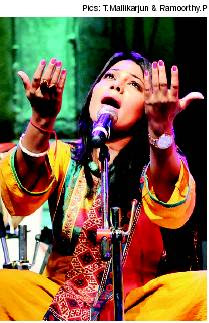
The Chowmahalla Palace, a symbol of Hyderabad’s rich Nawabi history, made a great venue for the Aman ki Asha Concert — a joint initiative of The Times of India and the Jang Group of Pakistan. The venue was magnificently lit, creating the ambience for a perfect Sufiana evening. The crowds walked in much ahead of time to be a part of the peace concert. Sufi singer Sanam Marvi from Pakistan and Indian playback singer Rekha Bhardwaj put across their message of peace and love through Sufiana kalam and some Bollywood numbers. Taking the stage first was Sanam. “I’m elated to be a part of the City of Nawaab’s. Hyderabad’s culture is similar to my hometown, Lahore. The grandeur of the venue is breathtaking,” said the singer before she began her rendition of Sufi numbers. The audience — sitting on the gaddis in baithak style, was mesmerized, as Sanam sang compositions by Bulleh Shah, Baba Sheikh Farid and Sachal Sarmast among others. Chhap Tilak and Main Jaano Aur Mera Khuda Jaane had the audience giving her thunderous applause. Sanam also sang her own composition in Sindhi as she belongs to the Sindh region in Pakistan. After enthralling the audience for more than 45 minutes, Sanam then invited Rekha Bharadwaj on stage. The duo sang Mast Kalandar leaving the audience deliriously happy as they sang along. Post that, Rekha took centre-stage. She began the evening singing Tere Ishq Main, saying, “I dedicate this song to Saman as this is her favourite number.” A few Sufi numbers later, Rekha switched to her popular Bollywood numbers. “Yeh mehfil itni khoobsurat hai, ki main filmi gaane nahi gaana chahati hoon. Lekin aap mujhe jaane nahi deenge.” The popular ‘Genda Phool’ from “Delhi 6” got the audience on its feet. She then rendered ‘Ranjha Ranjha’ on request, before ending the concert. “I love this city. I have friends here who I’ve known for more than 30 years. Hope woh meri aawaz sun ke aaj khush ho jaayenge,” said Rekha.

Sanam Marvi

Sanam Marvi

Rekha Bhardwaj

Rekha Bhardwaj

Chintoo Singh

chintoo singh

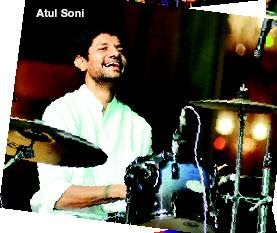
Atul Soni

atul soni

People Enjoying the music

Aman ki asha at Hyderabad

Aman ki Asha - Hyderabad

Rekha, Sanam performed in Hyderabad


The Chowmahalla Palace, a symbol of Hyderabad's rich Nawabi history, made a great venue for the Aman ki Asha Concert — a joint initiative of The Times of India and the Jang Group of Pakistan — on Saturday.

The venue was magnificently lit, creating the ambience for a perfect Sufiana evening. The crowds walked in much ahead of time to be a part of the peace concert. Sufi singer Sanam Marvi from Pakistan and Indian playback singer Rekha Bhardwaj put across their message of peace and love through Sufiana kalam and some Bollywood numbers. Sanam took the stage first. "I'm elated to be a part of the City of Nawaabs. Hyderabad's culture is similar to my hometown, Lahore. The grandeur of the venue is breathtaking," said the singer before she began her rendition of Sufi numbers.

The audience — sitting on the gaddis in baithak style — was mesmerised as Sanam sang compositions by Bulleh Shah, Baba Sheikh Farid and Sachal Sarmast, among others. Chhap Tilak and Main Jaano Aur Mera Khuda Jaane had the audience giving her thunderous applause. Sanam, who belongs to the Sindh region in Pakistan, also sang her own Sindhi composition. After enthralling the audience for more than 45 minutes, Sanam then invited Rekha Bhardwaj on stage. The duo sang Mast Kalandar, leaving the audience deliriously happy as they sang along. After that, Rekha took centre-stage. She began the evening singing Tere Ishq Main, saying, "I dedicate this song to Sanam as this is her favourite number." A few Sufi numbers later, Rekha switched to her popular Bollywood numbers. "Yeh mehfil itni khoobsurat hai, ki main filmi gaane nahi gaana chahati hoon. Lekin aap mujhe jaane nahi deenge." The popular Genda Phool from Delhi-6 got the audience on its feet. She then rendered Ranjha Ranjha on request before ending the concert. "I love this city. I have friends here who I've known for more than 30 years. Hope woh meri aawaz sun ke aaj khush ho jaayenge," said Rekha.

Friday, February 18, 2011

Yaksha & Mahashivarathri 2011 ( musical events)

 Yaksha & Mahashivarathri 2011 ( musical events)

We're happy to (finally) announce the lineup of this year's Yaksha and Mahashivarathri guests and performers.
Yaksha will happen from th3 24th of Feb until 2nd March and feature the talents of:

Details for Yaksha 2011 can be found here.

Mahashivarathri will be on the 3rd March and include the following artists:

Details about Mahashivarathri can be found here

Padmaja Fenani Joglekar


SHE HAS set to tune poems of two former Prime Ministers and was awarded Padma Sri in 2001. She has received the S. D. Burman Award for best playback singing, Miya Tansen Award for best classical-based song for Marathi film ``Nivdung," and the Bharat Nirman Award. She is one of the pioneers who introduced the ghazal format to Marathi literature.

Padmaja Phenany Joglekar, a Hindustani/ghazal/bhajan exponent from Mumbai was in the city recently to participate in the "Bhajan Sandhya."

A beaming Padmaja recalled the success of her cassette "Geet Naya Gaata Hoon" containing eight poems of Atal Bihari Vajpayee says, "Initially Atalji wasn't very excited about his poems being set to music as he had termed his poetry prose-oriented and written in free style. Anyway, after he asked me to give him some samples, he actually stood up in appreciation and said, "I applaud you for your music and voice."

Vajpayee went on to become Prime Minister and of course it feels simply great as the royalty from its sales goes to the Prime Minister's Relief Fund says Padmaja.

That is not all. Padmaja also got a chance to tune and sing former Prime Minister V.P. Singh's poems that are to be released shortly.

Bhajans composed by Anup Jalota are also in her repertoire and she plans to take them across to people musically.

Just as she was getting ready to step into the lab after graduating in microbiology, Padmaja made a retreat as the call of music was simply hard to resist.

With guidance from such stalwarts as Pt. Jasraj, sarangi player Ram Narayan and music director Hridaynath Mangeshkar, she honed her vocal skills and went on to traverse not just the nuances of Hindustanishaili, but also ghazals, geet and bhajans. She revelled in her versatility and her melodic forays into Marathi poems of Kusumagraj, Indira Sant, Mangesh Padgaonkar to name a few are popular with connoisseurs of literature in the Marathi cultural circuit.

Padmaja is now dedicated to her study of saints and poets. "It helps me choose the best of each poet and offer a better package during my concerts," she says. That is how the rarely sung musical form, Tappa is also being revived by her. The harkat and murkhiyaan of the tappa style she demonstrates, used to be a favourite of Kumar Gandharv and Bade Ghulam Ali Khan, she adds.

Padmaja Joglekar's concert was flagged off with Rajesh Johri's "Mai Mangal Deep Jalawun" in Yaman. Meerabai came across in Bageshri. While the hall reverberated with raag Bhoop for Kabirdas's verses "Ananda Ananda" with the audience singing along, the Sai bhajan and an enjoyable Bandhish in Basant were a fitting finale to her show. —R. G.

RANJANI GOVIND

Thursday, February 17, 2011

Ayaan Ali Khan

Ayaan Ali Khan


Ayaan Ali Khan

Also known as Ayaan Ali BangashN-
Born 5 September 1979 (1979-09-05) (age 31)
Origin Delhi, India
Genres Hindustani classical music, world fusion music
Instruments sarod
Associated acts Amjad Ali Khan, Amaan Ali Khan
Website Ayaan Ali Khan

Ayaan Ali Khan (Hindi: अयान अली खान; IAST: Ayān Alī Khān) (born 5 September 1979) is an Indian classical musician who plays the sarod. Khan is the son of Amjad Ali Khan and often performs with his older brother Amaan Ali Khan, with whom he hosted the music talent show Sa Re Ga Ma. He released solo albums and collaborations with brother and father.
Contents

Early life and career

Khan was born 5 September 1979 as the son of sarod player Amjad Ali Khan and Subhalakshmi Barua Khan, a classical dancer. His birth name was Bangash and he was born in at least the fifth generation of musicians; the Bangash lineage claims to have invented the sarod. Khan has an older brother, Amaan, and they were taught music by their father from a young age and later began to perform with their father on concert tours.

Khan has performed with his father and brother since the late 1980s and performed at Carnegie Hall in 1997. He released his solo debut album of classical music in 1999. Khan hosted the music talent show Sa Re Ga Ma on Zee TV with his brother for three years in the early 2000s. In 2002, Khan and his brother wrote a book about their father, Abba: God's Greatest Gift To Us. Moksha, a 2005 album made in with Amaan and Amjad Ali Khan and released by Real World Records, was nominated for Grammy Award for Best Traditional World Music Album. The brothers released Reincarnation, an album of world fusion music, in 2006, and a thematic album, Mystic Dunes, in 2007, and toured internationally. They were awarded a Lycra Style Award from MTV India in 2006. Khan and his brother also sing, including on the 2007 tribute album Remembering Mahatma Gandhi. Khan joined his family to perform for the Parliament of India in 2007. In 2009, after working under a movie contract that forbade public appearances for a year, the brothers returned to making music when the production by Bollywood director J. P. Dutta was cancelled. They are working on a Sufi music album.

Amjad Ali Khan with Ayaan Ali Khan

Personal life

Khan married Neema Sharma on 21 February 2008 and is an amateur painter; he has displayed devotional pictures in exhibition..

Discography
Khan playing the sarod

Solo

* Raga Bageshwari (1999)
* Footsteps (2000)
* Raga Shree (2002)
* Sonata (2005)
* Chords of Devotion (2005)

Ayaan and Amaan Ali Khan
Amaan standing with Ayaan

* Raga Puriya Kalyan, Rageshwari (2002)
* Strings Attached (2006) - with Matthew Barley (cello)
* Reincarnation (2006)
* Mystic Dunes (2006)
* Truth (2007)
* Passion (2007)
* Dreamz' (2007)

Amjad, Ayaan, and Amaan Ali Khan

* Sarod Ghar (2000)
* The Legendary Lineage
* Sarod Maestro Amjad Ali Khan - With Sons (2001)
* Sarod for Harmony - Live at Carnegie Hall (2002)
* Moksha (2004)
* Sarod Trilogy (2006)
* Remembering Mahatma Gandhi (2007)

More info about Ayaan Ali Khan


Amaan & Ayaan Ali Khan - Raag Kirwani